Monsoon Hacks for Home and Kitchen, Must-Have Monsoon Hacks for Home and Kitchen
Monsoon is my favourite season, the sound of rain, the cool breeze, that first-rain smell. But if you’ve lived through a few Indian monsoons, you know it also brings damp walls, musty cabinets, soggy spices, and floors that never seem to dry.
Over the years, I’ve picked up a few habits and small fixes that genuinely make monsoon easier at home. Sharing them here, in case they help you too.




Silica Gel Packets Are Your Best Friend
Moisture is the biggest enemy during monsoon, and it sneaks into places you don’t expect: shoe racks, wardrobes, even electronic boxes.
Keep silica gel packets or small cloth pouches of rice in your wardrobes, shoe cabinets, and drawers. They absorb excess moisture quietly and prevent that damp smell from settling in.
Replace or sun-dry them once a month for best results.
Spice Jars Need an Upgrade
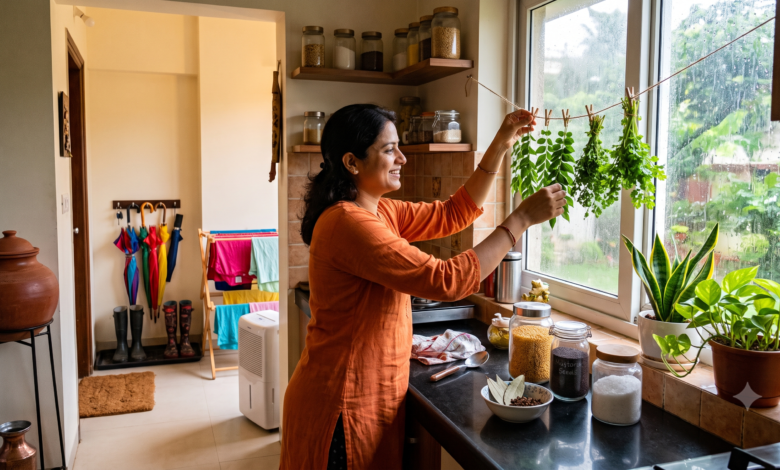
This one took me a while to figure out. Regular spice containers let in humidity every time you open them, and before you know it, your salt has turned into a solid block and your masalas have lost their aroma.
Switch to airtight glass or good-quality plastic containers with rubber sealing during monsoon. Add a few grains of raw rice to your salt and sugar containers, it genuinely helps absorb moisture and keeps them free-flowing.
Chopping Boards and Wooden Items Need Extra Care
Wooden chopping boards and furniture soak up humidity and can develop a musty smell or even fungus if not dried properly.
Always wipe wooden boards completely dry after washing and store them upright, not flat, so air can circulate around them. For wooden furniture, a light wipe with a dry cloth every couple of days keeps moisture from settling into the grain.
Doormats Are Doing More Harm Than Good
A wet, soggy doormat sitting at your entrance all monsoon is basically inviting mud and moisture straight into your home.
Rubber-backed coir mats work best for monsoon since they dry faster and don’t hold water like fabric mats do. Keep two mats on rotation, one outside for shoes and one indoors, so you’re not tracking mud onto your flooring.
Kitchen Exhaust and Ventilation Matter More Now
Humidity plus cooking steam is a recipe for damp walls and peeling paint around the kitchen. If your kitchen doesn’t have proper ventilation, this is the season it shows.
Run your exhaust fan for a few extra minutes after cooking, even after you’re done, to push out trapped moisture. If you don’t have one yet, this is worth prioritising before the next monsoon.
Under-Sink Cabinets Need Regular Checks
The area under the kitchen sink is one of the most neglected spots, and also one of the most vulnerable to leaks and dampness during monsoon.
Check for water seepage or a musty smell under your sink every couple of weeks. Keep this cabinet slightly less packed than usual so air can move through, and consider placing a small moisture absorber pouch inside.
Curtains and Soft Furnishings Trap Damp Smell Fast
Fabric holds humidity more than we realise. Curtains, cushion covers, and sofa throws can start smelling musty without any visible dampness.
Air them out on a dry day whenever you get the chance, and avoid keeping windows shut all day just because it’s raining. Even ten minutes of cross-ventilation makes a real difference.
Keep a Dedicated Monsoon Cleaning Kit Ready
Having to hunt for a mop, floor cleaner, and dry cloths every time it rains is a hassle. Keep a small monsoon kit ready near your entrance: a quick-dry mop, a bucket, and a good floor cleaner with anti-fungal properties.
It saves time and keeps your floors from staying wet and slippery for longer than they need to.
Don’t Ignore Balcony and Window Drainage
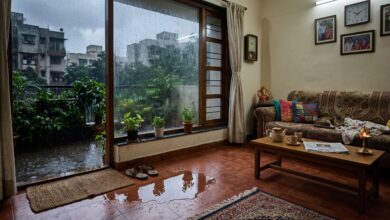
Balconies and window sills, this is where water actually enters most homes. A clogged drain outlet on the balcony can lead to water seeping into your living room walls without you even noticing until it’s too late.
Clear out leaves and debris from balcony drains before monsoon peaks, and check window sills for any small cracks or gaps that need sealing.
Customise These Hacks to Your Home
Every home faces monsoon differently depending on ventilation, direction, and how much exposure it gets to rain. Use these as a starting point, but pay attention to which corners of your home struggle the most, and focus your effort there.
That’s all for this one. I hope these hacks help you get through this monsoon with a little less dampness and a lot more comfort.
If you found this helpful, please share it with your family and friends. Don’t forget to subscribe to our channel and follow us on Instagram and Facebook for all the latest updates and video notifications. Stay dry! — Moduluxe Decor
Related Articles—-