Best Kitchen Chimney Guide for Bengali Cooking Styles
Why Bengali Cooking Needs a Different Chimney
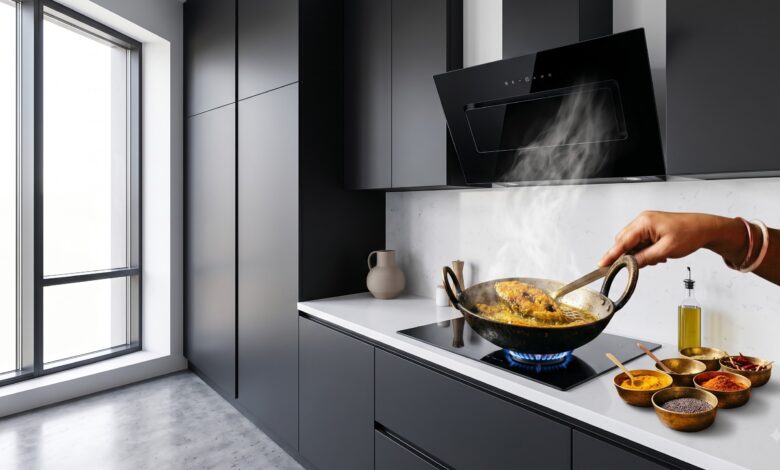
I install a lot of kitchen chimneys, and I see the same mistake constantly. Homeowners buy a chimney made for light, low-smoke cooking. Then they use it for heavy mustard oil frying, deep tadka, and daily fish fry. The chimney fails within a year. Let me guide you through choosing the right one for our cooking style.
Why Bengali Cooking Needs a Different Chimney
Our cooking style is unique. Mustard oil, heavy spices, fish fry, and slow-cooked curries release thick smoke and sticky grease. I always tell clients this upfront.




- ✗ A standard chimney built for light sautéing won’t survive Bengali kitchens
- ✗ Low-suction models leave grease film on cabinets within months
- ✓ You need higher suction power and oil-resistant filters
- ✓ Match the chimney to your actual daily cooking, not average use
1. Suction Power: The Most Important Factor
Suction power decides how well your chimney clears smoke and oil particles.
- ✓ Choose a chimney with 1200 m³/hr suction or higher for heavy cooking
- ✓ Homes with daily fish fry or heavy tadka need the higher range
- ✗ Avoid chimneys below 1000 m³/hr if you cook with mustard oil daily
2. Filter Type Matters More Than You Think
Different filters handle grease differently. I explain this to every client before they choose.
- Baffle filters: Best for heavy oil cooking, trap grease effectively, easy to clean
- Filterless auto-clean chimneys: Low maintenance, good for daily heavy use, higher cost upfront
- Mesh filters: Not ideal for Bengali cooking, clog fast with mustard oil and need frequent washing
I recommend baffle filters or auto-clean models for most Bengali households.
3. Chimney Size and Kitchen Layout
Size isn’t just about your stove width. I always measure the full cooking zone.
- ✓ Match chimney width to your stove size, usually 60cm or 90cm
- ✓ Choose 90cm models for larger cooktops or if you cook multiple dishes at once
- ✗ Don’t undersize the chimney just to save space, it reduces suction efficiency
4. Ducting vs Ductless Chimneys
This decision depends on your kitchen’s structure.
- ✓ Ducted chimneys work best for heavy smoke, oil, and spice cooking
- ✓ Ducting pushes smoke completely outside, ideal for daily Bengali cooking
- ✗ Ductless chimneys recirculate filtered air, less effective for heavy oil smoke
- ✗ Avoid ductless models if you fry fish or cook with mustard oil regularly
5. Auto-Clean Technology: Worth the Investment
I recommend auto-clean chimneys to most of my Bengali clients now.
- ✓ Auto-clean reduces manual maintenance significantly
- ✓ Better for households cooking heavy, oily meals every day
- ✗ Skip auto-clean only if your budget is tightly limited
6. Noise Level for Daily Long Cooking Sessions
Bengali cooking often means longer hours in the kitchen. Noise matters more than people expect.
- ✓ Look for chimneys rated below 60 decibels for comfortable daily use
- ✗ Avoid ultra-cheap models with high suction but excessive noise
Common Mistakes I See in Chimney Selection
- ✗ Buying based on price alone, ignoring suction rating
- ✗ Choosing mesh filters for daily mustard oil cooking
- ✗ Installing the chimney too high above the stove, reducing efficiency
- ✗ Skipping proper ducting installation to save on setup cost
My Final Recommendation
For most Bengali kitchens, especially with daily fish fry, mustard oil cooking, and heavy spice use, I recommend a ducted chimney with baffle filters, 1200 m³/hr or higher suction, and auto-clean technology if your budget allows it.
At Moduluxe Decor, I help clients across Kharagpur, Midnapore, Debra, Digha, Kolaghat, Jhargram, Balasore, and Baripada choose the right chimney for their actual cooking habits, not just the showroom demo. If you’re planning your kitchen, let’s get this decision right from the start.
Read More:-
Balcony Decor Ideas: Lights and Greenery That Survive the Monsoon
Budget vs Premium Modular Kitchen: What’s the Real Price Difference in 2026